

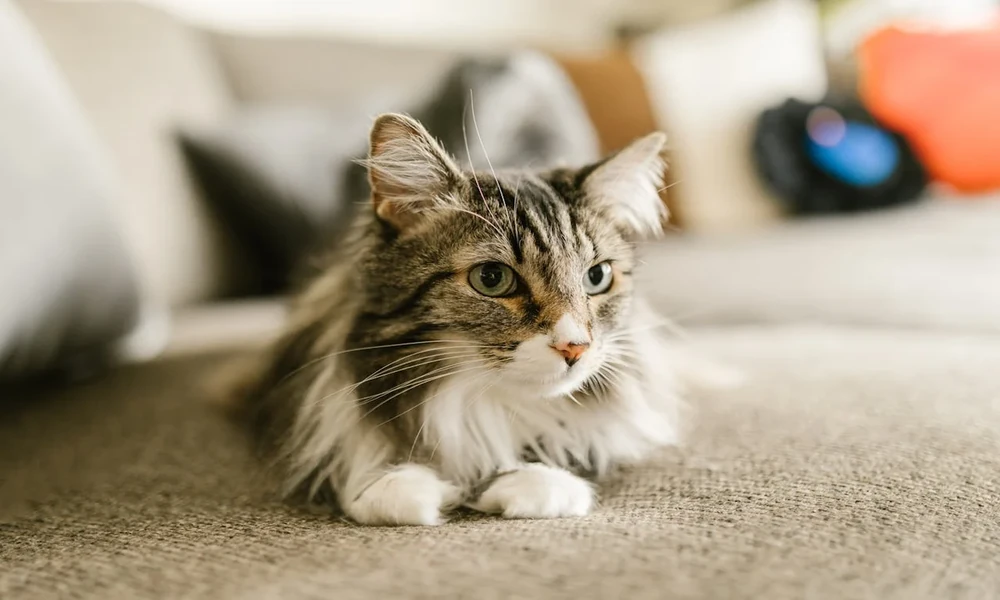
One of the hardest parts of caring for an aging or seriously ill cat is knowing how they are truly feeling. Cats cannot tell us when they are uncomfortable, and they are remarkably good at hiding pain. A cat may still get up for breakfast, sit in a favorite window, or purr when being petted even while dealing with significant discomfort.
For families caring for a senior cat, recognizing changes in quality of life often means looking beyond obvious signs of pain. Small changes in behavior, grooming, appetite, mobility, and daily routines can provide important clues about how comfortable your cat really is.
Why Cats Can Be Difficult to Read
Cats have a natural tendency to conceal weakness and vulnerability. That instinct can make illness and pain surprisingly difficult for owners to recognize.
Unlike a person who can describe where something hurts, a cat may simply become quieter or change where they spend their time. Some cats hide more frequently. Others stop jumping onto furniture or become less interested in being touched.
The key is knowing what is normal for your particular cat.
A cat that has always slept alone may not concern you by spending several hours under the bed. But if a normally social cat suddenly begins isolating themselves, that behavioral change deserves attention.
Watch for Changes in Social Behavior
Changes in personality are sometimes among the earliest signs that a cat does not feel well.
A previously affectionate cat might begin avoiding people or other animals. They may choose quiet rooms, closets, or areas underneath furniture rather than their usual sleeping locations.
The opposite can happen, too. Some cats become unusually affectionate or begin following their owners around the house.
You are not necessarily looking for one particular behavior. You are looking for a meaningful departure from your cat’s normal routine.
Pay Attention to Grooming
Healthy cats typically spend a significant amount of time grooming. As cats become older, weak, or uncomfortable, maintaining their coat can become difficult.
You may notice matting, a greasy appearance, dandruff, or areas of the body that your cat no longer seems to groom.
Arthritis can make twisting around to reach the back and hindquarters uncomfortable. Serious illness can also cause cats to lose interest in grooming altogether.
An unkempt coat does not necessarily mean that a cat has a poor quality of life, but when it appears alongside other behavioral or physical changes, it can be an important piece of the overall picture.
Look at Mobility, Not Just Walking
Mobility changes in cats can be extremely subtle.
Instead of developing an obvious limp, a cat may simply stop jumping onto the couch. They might hesitate before climbing stairs, sleep downstairs instead of upstairs, or spend most of the day in one easily accessible location.
The Cornell Feline Health Center notes that signs of joint pain in cats can be subtle and may include reduced activity, reclusive behavior, difficulty getting into and out of the litter box, avoiding stairs, and difficulty grooming. Cornell also explains that cats may instinctively conceal disability or weakness, making behavioral changes particularly important for owners to recognize. (source”””””””””’)
These changes can sometimes be treated or managed, so reduced mobility alone does not mean it is time to consider euthanasia. A veterinarian can help determine whether arthritis, another medical condition, or general decline is responsible.
Monitor Eating and Drinking
Appetite is another important part of evaluating your cat’s well-being.
A cat may begin eating smaller portions, stop showing excitement at mealtime, or eat only especially appealing treats. Some cats walk to their food bowl, sniff the food, and then leave without eating.
Changes in drinking can also occur.
Loss of appetite has many possible causes, including conditions that may be treatable. A sudden refusal to eat should therefore prompt a conversation with your veterinarian rather than automatically being viewed as an end-of-life sign.
With an elderly or terminally ill cat, however, a continuing decline in appetite combined with weight loss, weakness, and other changes may indicate that their overall quality of life is deteriorating.
Don’t Overlook the Litter Box
Litter box habits can reveal both medical and mobility problems.
An older cat may struggle to step over the sides of a litter box or have difficulty positioning themselves comfortably. You may begin finding urine or stool immediately outside the box even though your cat has been reliably house-trained for years.
Changes in the frequency of urination or bowel movements can also indicate medical problems.
Instead of assuming an older cat is simply becoming forgetful or difficult, consider whether getting to or using the litter box has become uncomfortable.
Think About What Your Cat Still Enjoys
Quality of life is about more than whether a cat is eating and breathing. Think about the things that have traditionally made your cat happy.
Do they still enjoy sitting in a sunny window? Do they seek affection? Do they watch birds outside? Do they respond when you enter the room? Do they comfortably rest and sleep?
Every cat is different, which is why quality of life cannot be reduced to one universal checklist.
It can help to identify three to five things your cat has consistently enjoyed throughout their life. Over time, ask yourself how many of those activities they can still comfortably participate in.
Keep Track of Good Days and Difficult Days
When you see your cat every day, gradual decline can be difficult to recognize.
Consider keeping a simple calendar. At the end of each day, mark it as a good day, an average day, or a difficult day.
You might consider appetite, mobility, interaction, grooming, litter box use, breathing, and overall comfort when making that assessment.
After several weeks, the calendar can reveal a pattern that is difficult to see from memory alone.
A single difficult day does not necessarily indicate that a cat is suffering. But when difficult days begin consistently outnumbering comfortable ones, it may be time for a more serious discussion with your veterinarian.
There May Not Be One Obvious Moment
Many families expect that their cat will eventually give them an unmistakable sign that it is time to say goodbye. Sometimes that happens, but often it does not.
Instead, quality of life may decline gradually.
Jumping becomes climbing. Climbing becomes staying on the floor. Eating a little less becomes eating very little. Occasional hiding becomes spending nearly the entire day alone.
Looking at all of these changes together can provide a clearer picture than focusing on any one symptom.
A veterinarian can help you determine whether additional treatment or pain management could improve your cat’s comfort or whether euthanasia may be the kindest option.
When that time comes, some families choose to avoid the stress of transporting an elderly or seriously ill cat to a veterinary clinic. AZ Hearts & Paws provides compassionate at-home cat euthanasia services in the comfort and familiarity of your cat’s own home.
