

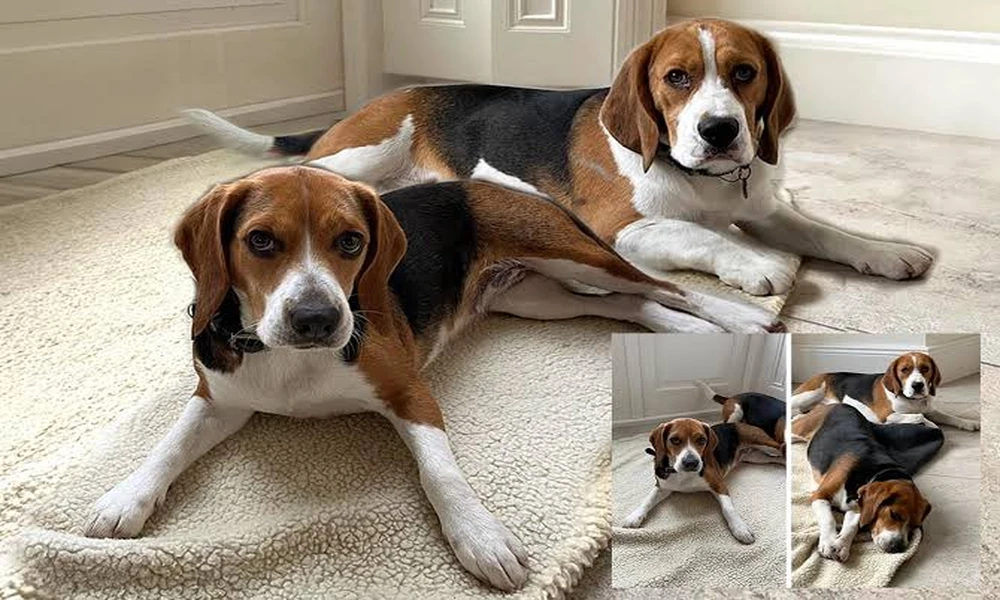
There may be nothing you want to change about your favorite pet photograph. The room, the slightly untidy blanket, and the expression all belong to a moment you recognize. Another image might contain a face you love surrounded by things you would rather not emphasize.
Those two photographs can lead to different decisions. One may feel complete as a photograph; the other may inspire an interpreted portrait. Before choosing, decide what you want to preserve and what you would welcome changing. A commission is one possible way to display your pet, not a necessary upgrade to an image that already matters to you.
Identify what gives the photograph its meaning
Look at the image without imagining a product around it. Name the part that makes you want to keep looking. Is it the pet’s expression, the specific setting, a person beside them, or the relationship between several details?
If the setting carries much of the meaning, simplifying it might remove something you value. A picture taken beside an old kitchen table may matter partly because of that table. Even if you would not choose it as a decorative background, it belongs to the memory recorded in the photograph.
If your attention returns almost entirely to the pet, you might feel differently. You may be open to another background or a different visual treatment, provided the expression and identifying features remain central.
Try finishing this sentence: “I would be disappointed if this image no longer showed ____.” Keep the answer concrete. It gives you a way to judge whether interpretation would serve your purpose.
Do not assume that emotional importance settles the choice in favor of a portrait. A meaningful photograph can remain a photograph. Equally, choosing an artistic version does not require you to discard or replace the source image. You can consider the proposed artwork on its own terms.
List the changes you actually want
If you are considering a custom pet portrait, write down what you hope will be different from the photograph. “More artistic” is a starting preference, but it leaves many decisions open.
Perhaps you want a quieter background, a more playful setting, a simplified treatment, or greater emphasis on the pet. You might instead want the same basic composition with a different visual character. Put each wish into plain language.
Separate those preferences from requests to correct uncertain information. Wanting a softer background is different from wanting an indistinct face made accurate. A style choice does not, by itself, answer questions about details that the source image does not clearly show.
Also distinguish the appearance of the artwork from how it is produced. If you want an original physical painting rather than a printed interpretation, establish that requirement before shopping. A painterly-looking example does not tell you the medium or object you will receive.
Now rank your proposed changes. Which one would make the project worthwhile? Which would simply be pleasant? If none feels important, displaying the photograph may already satisfy your goal. If one change feels essential, use it to guide your search rather than collecting unrelated styles that happen to look appealing.
Compare both choices against one display task
Give the two options the same job. You might be choosing one image for your own desk, a wall near the entrance, or a familiar room. Avoid comparing a casual phone image with an elaborate staged portrait and treating the presentation difference as proof that one is better.
Use a short decision grid with “Photograph” and “Portrait” as the columns. Fill in four rows: what must stay, what may change, what you know you will receive, and what you still need to confirm.
For a photograph, you might write that the original setting stays and no interpretation is requested. For a portrait, you might write that the pet’s markings should remain while the background treatment is open. Leave unknowns visible in both columns.
Then ask which option better fits the specific display you have in mind. You may prefer the photograph for a personal corner because the scene matters to you. You may prefer an interpretation for another location because you want the subject presented differently.
This is a preference exercise, not a contest between authenticity and artistry. Neither column needs to win in every situation. Choose the one that better meets the purpose you actually described.
If both columns still appeal, identify the decision you are not ready to make. You might be comfortable with interpretation but undecided about the background. Or you might like a portrait example while remaining attached to the original scene. Resolving that one uncertainty is more useful than opening another dozen product pages. Keep the photograph as your reference point, and explain what a different image would need to add before you would choose it.
Explore interpretation only as far as it helps
If the portrait column better fits your goal, choose two possible visual approaches to compare. Keep your essential feature in view as you look at examples. Ask what each approach would emphasize and what it might simplify.
A guide to choosing a pet portrait style can help translate a general preference into a more specific decision. Use it after deciding that you want interpretation, rather than using a style list to create a need you did not have.
For an example of a current photo-based offer, explore photo-based portraits from Pawfolio Art. Check the particular design, format, and available options against the changes on your list. Interest in one example should lead to a closer look at that product, not an assumption that every request is included.
If the available design would change the thing you most want to preserve, consider another approach. You can admire a dramatic portrait without wanting that treatment for your own pet.
For pet portraits from photos, the useful next step is a clear brief: the reference you want to use, the detail that must remain, and the change you would like to explore. The maker can then address the actual request.
Keep the original if the artwork serves a different purpose
You do not have to choose one image to represent every part of your relationship with your pet. A photograph and a portrait can have separate roles, but that does not mean you need to purchase two new objects.
You might keep the original in an existing album while displaying the artwork. You might continue displaying the photograph and save the idea of a portrait for a later project. Or you might decide that the image already in your home needs no companion at all.
Imagine a photograph of a pet beside a much-used garden chair. The owner may want to preserve that whole scene in the album while commissioning a separate image centered on the pet. Another owner might find the scene inseparable from the subject and prefer to display the photograph unchanged. Both are coherent choices.
Keep the original file regardless of the decision. It remains the reference for the moment you started with. Any commissioned interpretation can be considered an additional image rather than a correction to the value of the first one.
Choose the image for the job you want it to do
Before committing, read your original sentence about what must remain. Does the chosen option preserve it? Are the desired changes clear? Do you understand the object or artwork you are considering?
If the photograph already answers those questions, keep it. If a pet portrait offers an interpretation you genuinely want, explore that specific direction. A good decision leaves you with an image you want to live with, without requiring you to believe that the other option was somehow less meaningful.
