

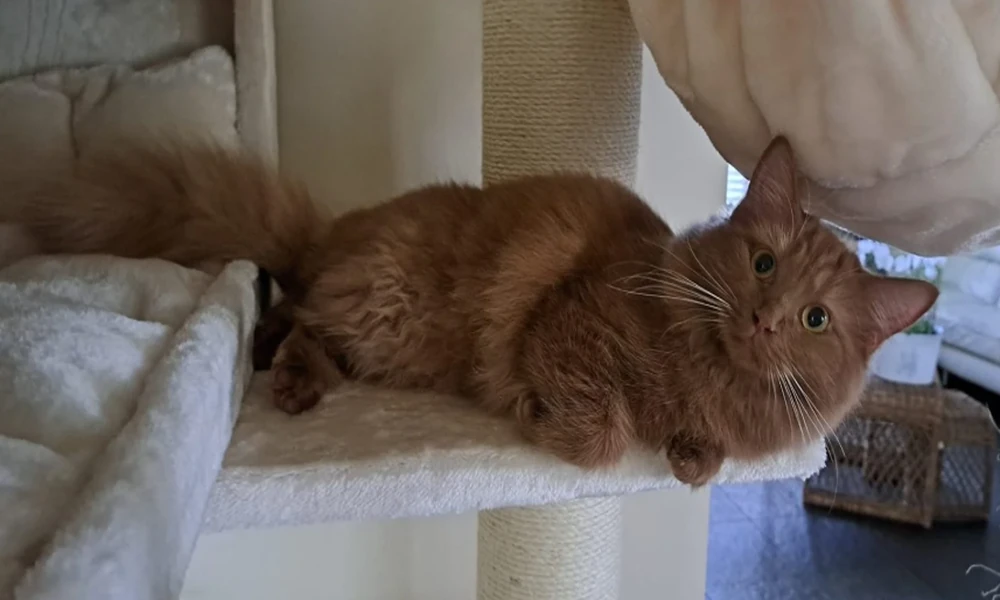
Ragdoll families often begin their search with appearance. They may want a certain color, pattern, sex, or facial marking. That is understandable. Ragdolls are striking cats, and unusual colors can make the search even more exciting.
However, the kitten that looks perfect in a photograph is not automatically the kitten that will fit a household best.
When families compare brown Ragdoll kittens for sale, cinnamon kittens, chocolate kittens, or traditional seal and blue Ragdolls, color should be only one part of the decision.
A kitten’s developing temperament, early socialization, confidence level, energy, household experience, and relationship with people can have a much greater effect on everyday life.
Good kitten matching therefore asks a different question.
Instead of only asking, “Which kitten do I like most?”, it also asks:
“Which kitten is most likely to thrive in the home I can provide?”
Table of Contents
Why appearance gets so much attention
What Ragdoll temperament actually means
Why breed temperament is not a personality guarantee
What breeders can learn by observing a litter
Why early socialization matters
How household lifestyle affects kitten matching
Male vs female Ragdolls
One Ragdoll or two?
Questions families should answer before choosing
What a breeder should tell you about temperament
Why rare color should never override good matching
A practical Ragdoll kitten matching checklist
Final thoughts
Why Appearance Gets So Much Attention
Most families first discover a kitten through photographs.
Color naturally becomes one of the easiest characteristics to compare.
A family may prefer:
cinnamon
chocolate
seal
blue
mitted
bicolor
colorpoint
lynx
There is nothing wrong with having a preference.
The problem begins when appearance becomes the only selection criterion.
A photograph cannot show how a kitten responds to being picked up. It does not reveal whether the kitten rushes confidently toward visitors or prefers to observe first.
It also cannot tell you how the kitten responds to noise, grooming, other animals, unfamiliar situations, or extended human interaction.
Those characteristics become much more important after the kitten comes home.
What Ragdoll Temperament Actually Means
Ragdolls have a reputation for being gentle, affectionate and people-oriented.
Both TICA and CFA describe the breed as generally affectionate, calm and sociable. Many Ragdolls enjoy staying close to their people, and the breed is often considered suitable for families with children and other pets.
However, breed temperament describes a general tendency.
It does not mean every Ragdoll behaves exactly the same way.
highly outgoing
very playful
constantly seeking attention
Another may be:
quieter
more observant
slower to approach new people
A third may fall somewhere between the two.
All three can still be perfectly normal Ragdolls.
Therefore, families should avoid expecting every kitten to fit the popular image of a cat that immediately goes limp when picked up and wants to be held all day.
Breed Temperament Is Not a Personality Guarantee
One of the most useful things prospective owners can understand is that breed characteristics and individual personality are not the same thing.
Ragdolls are generally known for being affectionate.
Yet one Ragdoll may prefer lying beside its owner rather than sitting directly on a lap.
Another may follow people from room to room.
A third may actively ask to be picked up.
None of those cats necessarily has the “wrong” temperament.
They simply express attachment differently.
This is especially important when a family says:
“I want the cuddliest kitten.”
The breeder needs to understand what cuddly means to that family.
Do they want a cat that tolerates being carried?
A cat that sleeps on the bed?
One that sits on laps?
Or simply a social cat that wants to stay nearby?
Those are different expectations.
What Breeders Can Learn by Observing a Litter
A responsible breeder has an advantage that a prospective family does not.
The breeder sees the kittens repeatedly.
Not just during a ten-minute visit.
Over time, patterns begin to appear.
For example:
Which kitten usually approaches first?
Which kitten recovers quickly after hearing an unfamiliar sound?
Who tends to initiate play?
Which kitten prefers calmer interaction?
Who enjoys extended handling?
Which kitten is comfortable entertaining itself?
How do the kittens interact with their littermates?
Does one kitten consistently seek people?
These observations become much more useful as kittens develop.
No breeder can predict an adult personality with perfect accuracy. Environment and maturity continue shaping behavior after a kitten leaves.
However, repeated observation gives a much better basis for matching than coat color alone.
Why Early Socialization Matters
Good temperament does not develop from genetics alone.
Early experiences matter.
A kitten raised in a normal home environment can gradually become familiar with everyday life.
That may include exposure to:
household voices
doors opening and closing
television
vacuum cleaners
grooming
nail handling
carriers
different floor surfaces
normal movement around the home
visitors
gentle handling
The goal is not to overwhelm kittens with stimulation.
Instead, breeders can introduce ordinary experiences gradually and positively.
Over time, those experiences can help kittens become more adaptable.
This is what meaningful socialization looks like.
The phrase “well socialized” should mean more than “the kittens live inside our house.”
Socialization Should Match the Kitten’s Stage
A newborn kitten and a twelve-week-old kitten obviously need different experiences.
Socialization develops progressively.
During early life, gentle handling and positive human contact help kittens become familiar with people.
Later, their world expands.
They begin exploring.
They encounter toys.
They learn litter habits.
They experience grooming.
They hear normal household sounds.
They interact more actively with people and littermates.
Eventually, breeders can observe how individual personalities respond to those experiences.
That information is valuable when choosing homes.
Household Lifestyle Should Influence the Match
There is no single ideal Ragdoll temperament for every family.
Consider two homes.
Home One
Two adults work from home.
The house is quiet.
There are no other pets or children.
A slightly reserved kitten that bonds deeply after becoming comfortable may thrive there.
Home Two
There are three children, a friendly dog, visitors, and plenty of household activity.
A confident, adaptable kitten that recovers quickly from stimulation may be a more natural fit.
Neither kitten is better.
The homes are simply different.
This is why good breeders ask questions before placing kittens.
The answers give context to temperament observations.
Children and Ragdoll Kittens
Ragdolls often do well in families with children, but the children’s behavior still matters.
Parents should consider:
the children’s ages
experience with animals
ability to handle a kitten gently
household noise level
whether adults will supervise younger children
A tolerant kitten can still become stressed by constant chasing or rough handling.
Therefore, successful placement depends on both sides.
The kitten needs an appropriate temperament, and the family needs realistic expectations about how children should interact with a cat.
Dogs and Other Cats
The same principle applies to other pets.
Simply saying:
“Ragdolls are good with dogs.”
does not tell us enough.
What kind of dog?
A calm twelve-year-old dog that has lived with cats presents a very different situation from a young, high-energy dog that has never met one.
Important questions include:
Has the dog lived with cats?
Does it chase small animals?
How excitable is it?
Can the family control introductions?
Does the existing cat enjoy other cats?
Is the resident animal territorial?
The incoming kitten’s personality matters too.
A highly confident kitten may cope well with a friendly active household.
A more cautious kitten may benefit from a slower environment and carefully managed introductions.
Male vs Female Ragdolls
Families frequently ask whether males or females are more affectionate.
You will hear plenty of generalizations.
Some owners say males are more openly affectionate and playful. Others describe females as more independent.
Yet real households regularly produce exceptions.
Current Ragdoll-owner discussions show considerable variation. Some owners have extremely cuddly males and more independent females, while others report the opposite.
Therefore, sex can be part of a family’s preference, but it should not replace evaluation of the individual kitten.
If the goal is a particular personality, choosing based on observed temperament usually makes more sense than assuming sex guarantees behavior.
One Ragdoll or Two?
Another common question is whether Ragdolls should always go home in pairs.
Two compatible kittens can provide each other with:
play
companionship
physical activity
social interaction
For families who spend long hours away from home, a pair can sometimes work very well.
However, two is not automatically better in every situation.
Some cats are happiest with feline companionship. Others prefer more personal space.
Recent owner discussions show both experiences. Many families strongly recommend pairs, while others report that one cat became happier after no longer sharing its home with a more dominant companion.
That is why “always get two” is too simplistic.
If a family wants two kittens, breeders should think about compatibility, not merely availability.
Two kittens that already interact comfortably may make more sense than pairing two unrelated personalities simply because their colors match.
Color Still Matters – Just Not by Itself
Families searching specifically for cinnamon Ragdoll kittens usually have a genuine attraction to the warm color.
That preference can absolutely be part of the matching process.
The better approach is:
color preference + temperament fit + household suitability
rather than:
color preference alone
Suppose two cinnamon kittens are available.
One is extremely outgoing and energetic.
The other is calmer and prefers longer periods of gentle interaction.
A busy family with children may naturally connect with one. A quiet adult household may prefer the other.
Both families can still get the color they love without ignoring personality.
Questions Families Should Answer Before Choosing
Before selecting a kitten, it helps to describe the home honestly.
How much time is someone usually home?
A household where someone works remotely is different from one where everyone leaves for ten hours each weekday.
Are there children?
If yes, what ages are they?
Are there other pets?
Their temperament matters just as much as their species.
How active is the household?
Some kittens adapt readily to constant activity. Others prefer calmer surroundings.
What type of affection are you hoping for?
Be specific.
“Affectionate” could mean lap sitting, sleeping nearby, following people around, tolerating being carried, or actively seeking physical contact.
How often does the family travel?
Families that travel frequently need realistic plans for cat care.
Do you want one kitten or a pair?
If two, compatibility should become part of the breeder’s matching process.
What a Breeder Should Tell You About Temperament
Families should feel comfortable asking breeders what they actually observe.
Useful answers sound like:
“This kitten is usually one of the first to greet us.”
or:
“She enjoys being around people but doesn’t constantly ask to be held.”
or:
“He is confident around household activity and plays comfortably with the other kittens.”
Those descriptions contain information.
Less useful answers are broad promises such as:
“Every kitten is extremely cuddly.”
Individual kittens are rarely identical.
A breeder who spends meaningful time with a litter should usually be able to describe differences as the kittens become old enough for those differences to emerge.
Why Rare Color Should Never Override Good Breeding
Unusual colors can create strong demand.
That creates a responsibility for both breeders and buyers.
A rare coat should never become more important than:
health
genetic planning
temperament
socialization
appropriate veterinary care
sound structure
responsible placement
Rarity does not improve a kitten’s quality of life.
Good breeding practices do.
Therefore, families should avoid breeders who make color the entire selling point while providing little information about the parents, health program, temperament, or kitten-rearing process.
A Practical Ragdoll Kitten Matching Checklist
Instead of choosing solely from photographs, families can evaluate several areas together.
| Factor | Questions to Consider |
| Color | Which colors or patterns do we genuinely prefer? |
| Temperament | Do we want highly outgoing, moderate, or quieter? |
| Handling | How important is being carried or sitting on laps? |
| Children | Are children present, and how experienced are they with cats? |
| Other pets | What are their ages, energy levels and temperaments? |
| Schedule | How many hours will the kitten normally spend without people? |
| Activity | Is the household quiet, moderate, or very busy? |
| One or two | Would another compatible kitten realistically benefit our home? |
| Grooming | Is the family prepared for regular coat and nail care? |
| Long-term plans | Are moves, travel or major household changes expected? |
No single answer decides the match.
Together, however, they give the breeder a much clearer picture of what kind of kitten may thrive in the household.
The Goal Is Not the “Best” Kitten
Prospective adopters sometimes ask which kitten in a litter is best.
Usually, that is the wrong question.
A litter does not need one winner.
One kitten may be ideal for a family with children.
Another may suit someone living alone.
A third may fit particularly well with an existing gentle cat.
The purpose of thoughtful matching is to find the best fit between a particular kitten and a particular home.
That approach also takes pressure away from choosing based purely on photographs.
Color can still matter.
Pattern can still matter.
Sex can still matter.
But none needs to make the decision alone.
Final Thoughts
Ragdolls earned their popularity because of much more than their appearance.
Their affectionate and generally easygoing nature makes them appealing companions, while colors ranging from traditional seal and blue to chocolate, cinnamon and other variations give families plenty of visual preferences to explore.
However, the most successful kitten placement looks beyond the coat.
A prospective family should think about lifestyle, children, existing pets, work schedule, expectations for affection, and whether they want one kitten or a pair.
At the same time, breeders should observe their kittens carefully and describe what they actually see rather than promising that every Ragdoll will have exactly the same personality.
Color may be what first catches someone’s attention.
Temperament and compatibility are what the family will live with every day.
The strongest choice brings both together.
