

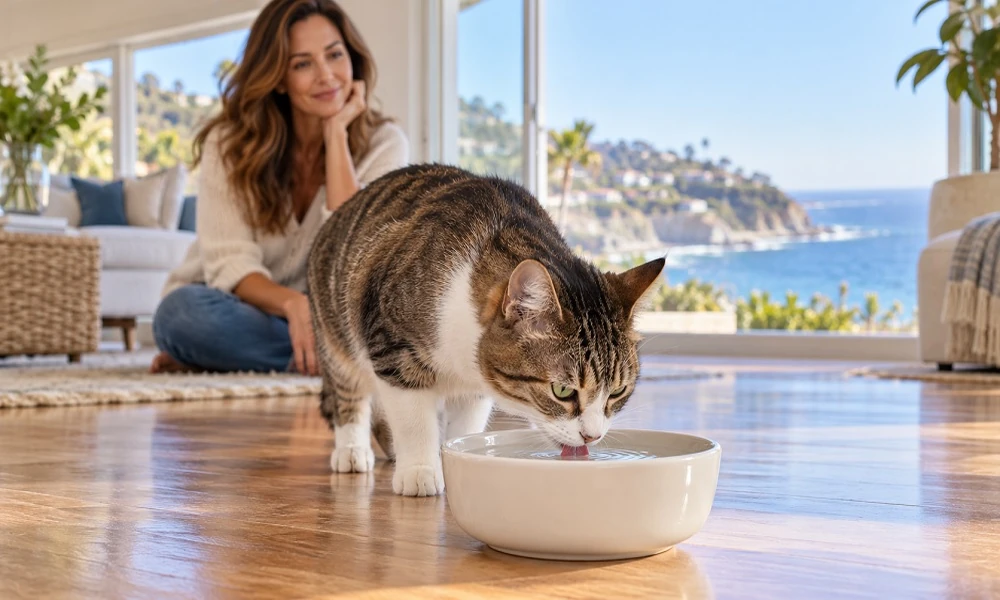
A water bowl that empties faster than usual can be easy to dismiss. Perhaps the heating is on, the food has changed, or another pet has been sharing the bowl. Those details matter. So does a change that continues without a clear explanation.
For cat owners, the useful question is whether drinking has changed from that individual cat’s normal routine. Watching that pattern and arranging an examination can provide more useful answers than trying to diagnose the problem from a symptom list.
Start With The Whole Picture
One extra visit to the fountain says little on its own. Look at what is happening around it. Has the cat started waiting at the tap? Are litter clumps noticeably larger? Is the food bowl empty while the cat seems thinner?
A simple record helps turn a vague concern into a clear account. Note when the change began, what food the cat eats, and whether appetite, activity, or litter habits have changed. Include recent medicines and supplements. In a home with several cats, explain that shared bowls make individual drinking difficult to estimate.
Keep fresh water available. Restricting it to reduce litter-box cleaning does not address the underlying concern.
Why Thirst Deserves A Veterinary Conversation
Cornell’s explanation of feline diabetes and its warning signs identifies increased thirst, increased urination, and weight loss despite a good appetite as important clues. Those changes warrant investigation, but they do not establish a diagnosis at home.
Avoid choosing a supplement or changing treatment because an online description sounds familiar. The same household observation can have more than one explanation. An examination gives the veterinarian a starting point for deciding what needs checking.
For Laguna Beach owners searching for a vet near me, Aliso Beach Animal Clinic offers wellness examinations and diagnostic services. When contacting the team, describe the drinking change alongside any appetite, weight, or litter-box changes rather than simply requesting a routine checkup.
Prepare Observations That The Team Can Use
There is no need to arrive with perfect measurements. A short, consistent record is often easier to explain than several pages of estimates. Use the same bowl and ordinary routine where possible, and note when water is topped up or spilled.
Bring the name of the current food and a list of everything the cat receives, including treats and medicines. If previous results came from another practice, ask how to share those records before the visit. This helps the appointment begin with the relevant history available.
Write down two or three questions that matter most. For example: What could explain this change? Which tests would help? When should the clinic receive an update? Clear questions make it easier to leave with a plan the household understands.
Understand What Happens After A Diagnosis
The American Veterinary Medical Association’s guide to diabetes in pets describes care that may involve medication, diet, and ongoing monitoring. Treatment should follow a veterinary diagnosis and an individual plan, rather than a product recommendation found online.
If treatment is prescribed, ask the team to demonstrate any unfamiliar task. Request written instructions, clarify what to do if the cat refuses food, and confirm whom to contact with questions. A plan is more useful when everyone responsible for feeding or medication understands it.
Keep follow-up notes in one place. Record questions as they arise instead of changing the plan between appointments without guidance. This creates a shared account of what has happened since the last conversation.
Make The First Call Specific
An owner does not need to know the cause before asking for help. A useful opening is straightforward: the cat has been drinking noticeably more, the change began on a particular day, and other changes have or have not appeared. Tell the team if the cat seems unwell now so they can advise on urgency.
Ask about appointment availability and whether anything should be brought to the examination. Do not delay the call while trying to collect an ideal home record. Observations support care; they are not a prerequisite for requesting it.
Before the appointment ends, clarify the next point of contact. If results are pending, ask when and how they will be discussed. If monitoring is recommended, confirm which observations the team wants and when to report back. This keeps the owner from having to interpret an unfinished plan alone and gives the household a practical task while the investigation continues.
Contact Aliso Beach Animal Clinic to arrange an examination and discuss the changes in the cat’s usual drinking and litter habits.
